
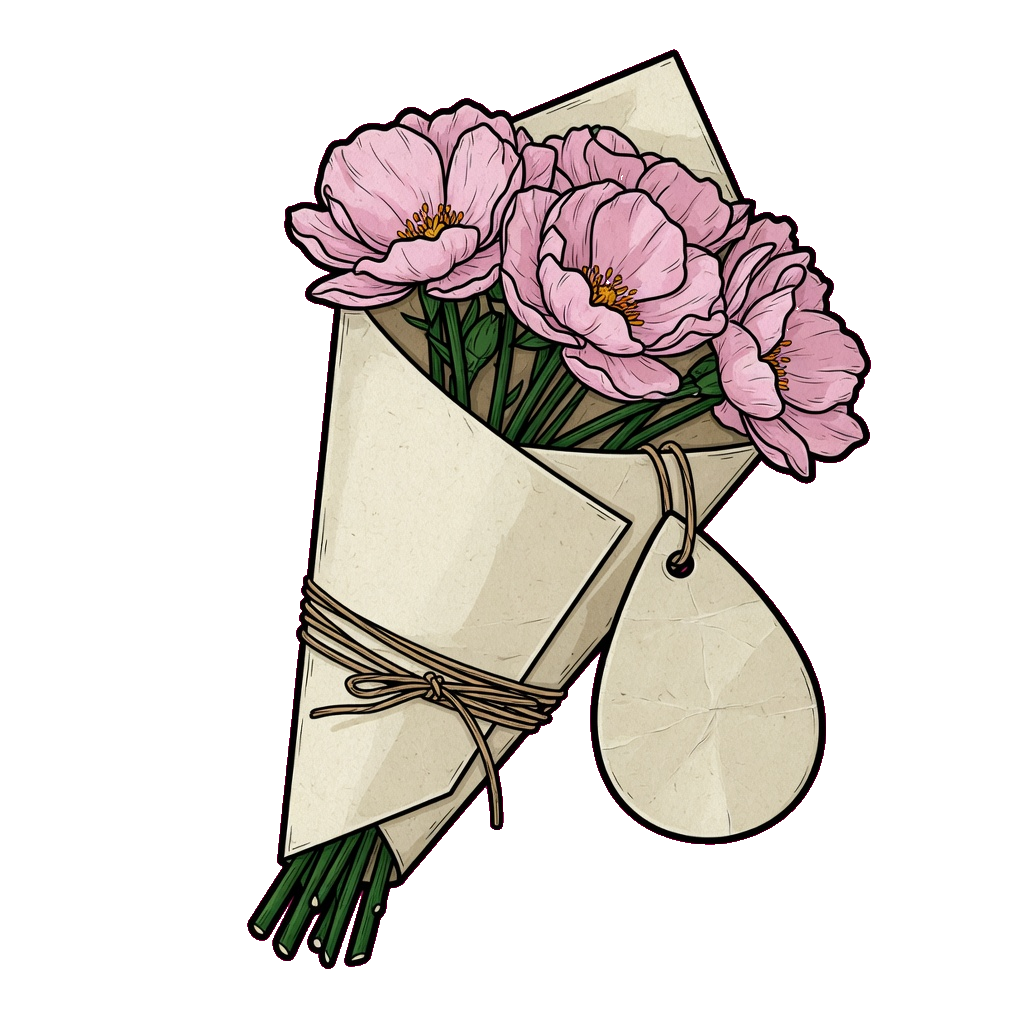
Same-day flowers in Orlando are a routing problem and a care problem at the same time. A wrap that sits in a trunk on International Drive in July is not the same object as a wrap that walks into an air-conditioned lobby on Lake Eola. Name the neighborhood first. Then the window. Then whether you want a hand-tied bouquet, a porch leave, or a bowl that can stand on a table.
This guide is for travelers and locals who need stems in this city today. Hours and prices come from the shop you name. Messages go through Contact. The window you write is the window we work against.
Name the neighborhood first

Orlando does not run on one clock. I-4 is the spine. Downtown and Lake Eola sit on the city side of that spine, with apartments, office towers, and porches mixed on the same blocks. International Drive and the Orange County Convention Center sit on the tourist corridor. Lake Nona and the airport hotel belt sit southeast toward Orlando International Airport. A park-week morning on I-Drive is not a Tuesday in a downtown tower, and a Medical City drop in Lake Nona is not a resort campus with more than one lobby.
When you write, put the place in the first sentence. Downtown, Thornton Park, and the apartments around Lake Eola Park are short walks and short drives from one another. Front-desk condos, gated porches, and office lobbies on the same few streets. “Downtown” alone is not enough if the drop is a tower with a loading dock; “Lake Eola” is not enough if the porch is behind a gate.
International Drive is a long strip of hotels, attractions, and convention overflow. A building number, a tower name, or the house name as the reservation spells it matters more than the words “I-Drive.” The corridor is not one lobby. Properties near the convention campus, properties near the parks, and properties up toward Universal Boulevard do not share a driveway.
Lake Nona is residential, medical, and airport-adjacent. A house on a gated street, an apartment near the town center, and a hotel that serves the hospital district are three different drop points. The airport hotel belt turns rooms overnight. Write the arrival date, not last night’s stay. If the recipient is between terminals and a rental-car bus, a front-desk hold is kinder than a chase.
Heat cooks cut stems
Central Florida afternoons bake a parked car. The National Weather Service’s page on children, pets, and vehicles describes how a vehicle acts like a greenhouse: the sun’s shortwave radiation heats objects it strikes. A dark dashboard or seat can reach the range of 180 to over 200°F, and those surfaces then warm the air trapped inside. Hyperthermia is the human version of that physics. Cut stems are quieter about it, and they still cook.
The Houston office of the National Weather Service puts numbers on the rise on its heat page: the temperature inside a vehicle can rise 20 degrees in as little as 10 minutes, and 50 degrees in an hour, even when outside air temperatures are in the 70s. Interior air can reach 120°F in minutes. Cracking the windows, the same page notes, provides little if any relief. That is the parked-car problem for a bouquet on a seat, in a trunk, or on a dashboard while someone checks in.
Ask for shade, water, and a lobby hold. A wrap should not wait in a car while a driver parks a resort campus and walks to the correct tower. If the drop is a house porch in afternoon sun, say so. A shaded corner, a covered entry, or a handoff at the door is kinder than a sun-baked stoop. If the drop is a hotel, a front-desk hold in air conditioning is the usual safe harbor. Keep a water source in the ask when the drop sits more than a few minutes: a vase, a bowl, or a wrap that will be recut as soon as it is inside.
Heat still has a clock. A window that lands in the hottest part of a Central Florida afternoon should assume a hold indoors, not a wait in a lot off I-4.
What to put in an inquiry
use Contact, or use the form, with the facts a driver and a florist both need. Incomplete geography is how a same-day wrap becomes a tour of the wrong International Drive hotel.
- Recipient name. The person who should be able to claim the flowers.
- Drop point. A house, an apartment, an office lobby, a hotel, or a venue, with the neighborhood named. Downtown, Lake Eola, I-Drive, Lake Nona, and the airport hotel belt are different routes.
- Window you need. Morning, afternoon, a ceremony time, a check-in. Not a published cutoff; the window you write is the one we work against.
- Bouquet versus arrangement. A wrapped bunch the recipient can recut into a vase, or a bowl or vase already standing in water.
- Card message, if there is one.
- Gate code, loading dock, floor and suite, tower name, or front-desk notes when those are the difference between a completed drop and a loop around the block.
A wrapped bouquet is the right object for a doorway handoff and for a hotel hold the guest will carry upstairs. A standing arrangement is the right object for a table that should already look finished when the room opens. If you are not sure, say what the flowers are for, welcome, birthday, congratulations, a porch leave, and we will map the family from the occasion.
After the drop: recut and water
Once the wrap is inside, the recipient’s job is water. Penn State Extension’s Give Your Fresh Flowers Some Love is a public checklist that still holds in a hotel bathroom as well as in a kitchen: wash the vase, use the florist packet of flower food, strip leaves that would sit below the water line, recut stems at an angle (under water in a bowl, a sink, or under the tap if you can), change the water every few days, and keep the arrangement cool, out of direct sun, away from vents and appliances.
Purdue Extension’s HO-158, Add Hours to Your Flowers, adds the same core moves with a little more stem physics. Recut at least half an inch with a sharp knife or shears so you expose a fresh surface. Recut rose stems under water. Cut on a slant so the end does not sit flat on the vase floor and so the stem is easier to seat. Place recut flowers in water immediately. Purdue cites warm, clean water in the range of 100 to 110°F because warm water moves into the stem more quickly than cold. Remove foliage that would sit underwater; submerged leaves decay and feed the bacteria that shorten vase life.
A wrap left in paper on a nightstand after a Florida afternoon will not drink. Recut the same day. If the drop was a standing bowl, top up the water, pull any leaves off the water line, and keep it out of the window that turns a downtown room into a greenhouse by 3 p.m.
Houses, offices, and hotels
A porch drop needs a place to leave the wrap out of the sun and a gate code if the street does not open. Name the neighborhood, Lake Eola, a downtown landing, a Lake Nona house, and the shaded spot if you have one.
An office drop needs a floor, a suite, and a person at an office desk who can take the handoff. Downtown Orlando and the medical and airport-adjacent floors in Lake Nona are workplaces with lobbies that close. Name the workplace as a place, and name a person who will be there in the window you wrote.
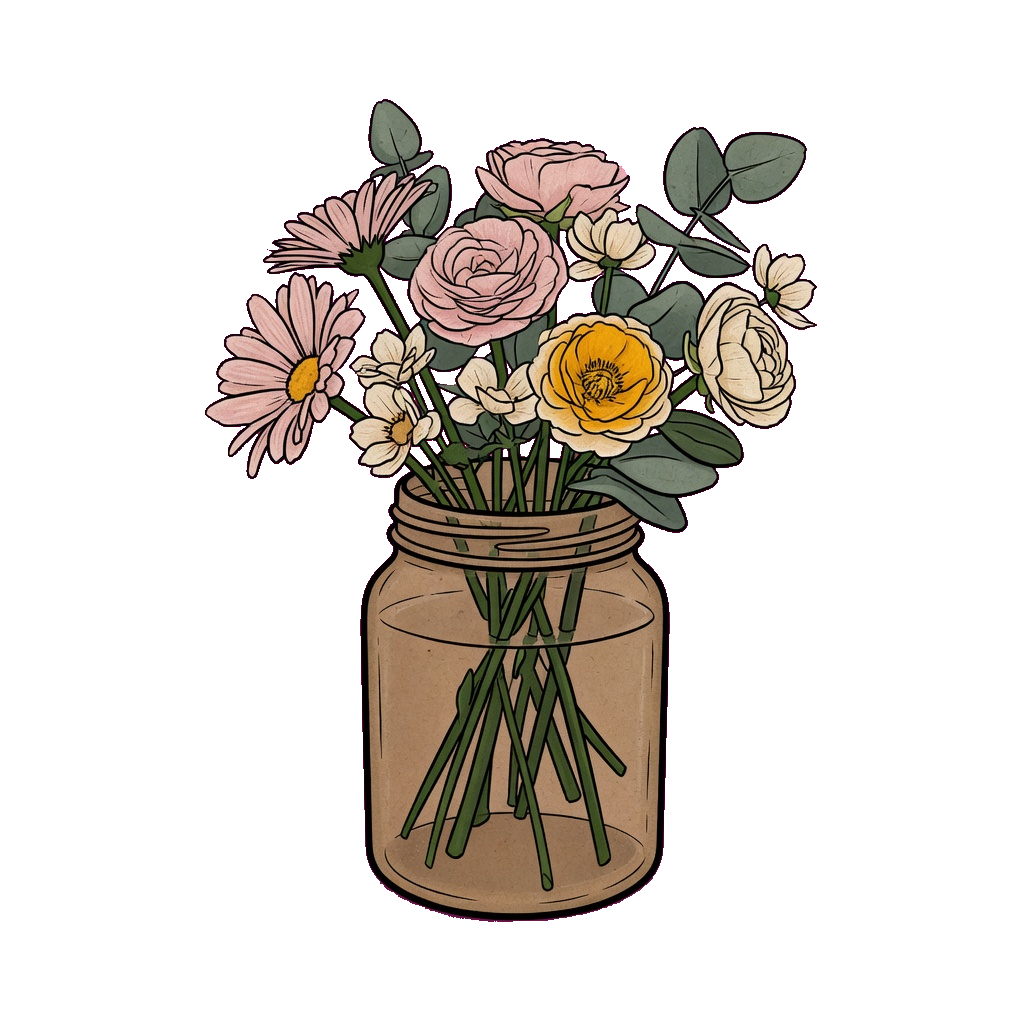
A hotel drop needs the guest name as booked. A room number without that name is not a drop. The hotel-drop guide covers front-desk holds, tower versus lobby on a resort campus, convention weeks, and event stems. The hotel-drop kits cover what the wrap needs for the ride; wrap vs hotel arrangement is the paper-versus-vase fork. Do not send a room number alone and expect the hotel front desk to guess the stay. The three families with stills are on the catalog.